

history
The History of Winters, Texas: From Pioneer Settlement to a Proud Community

Located in West-Central Texas, Winters is a historic community in Runnels County with deep roots in agriculture, ranching, railroad development, and local traditions. Since its earliest settlement, the town has grown through the determination of pioneering families and generations of hardworking residents.
Furthermore, the history of Winters reflects the broader development of rural Texas, where transportation, agriculture, and community cooperation helped transform small settlements into established towns.
The Early Settlement of Winters, Texas
The history of Winters began in 1880, when the families of C. N. Curry and C. E. Bell settled in the Bluff Creek Valley, approximately one mile southeast of the present-day town.
At that time, settlers relied primarily on farming, ranching, and cooperation with neighboring families. As a result, small agricultural communities gradually developed throughout the region.
John N. Winters, a local rancher and land agent, contributed to the settlement by donating land for its first school.
According to historical accounts, a cowboy named Jack Mackey suggested naming the community after John N. Winters. Eventually, the name Winters became established and remains part of the town’s identity today.
The Establishment of a Growing Town
During the 1890s, Winters began developing essential community institutions.
In 1891, the town received its post office, with Frederick Platte serving as its first postmaster. By 1892, the population had reached approximately 163 residents.
Meanwhile, churches, schools, and local businesses became increasingly important to everyday life.
In addition, these institutions provided gathering places where residents could exchange information, support their neighbors, and strengthen community relationships.
Consequently, Winters gradually developed from a small agricultural settlement into a more organized rural community.
The Railroad and Economic Expansion
One of the most significant developments in Winters occurred in 1909, when the Abilene and Southern Railway extended its railroad line from Abilene to the town.
As a result, farmers and merchants gained improved access to regional markets.
Furthermore, railroad transportation made it easier to move agricultural products, commercial supplies, and passengers between Winters and neighboring communities.
The town was also incorporated in 1909. During the same period, a cottonseed oil mill became an important local industrial enterprise.
The mill operated until 1939, demonstrating the economic importance of cotton production.
Therefore, the arrival of the railroad represented a turning point in the commercial development of Winters.
Agriculture and Ranching: The Foundation of Winters
Agriculture has played an essential role in the history of Winters and Runnels County.
Early settlers depended heavily on cattle ranching, cotton farming, and other agricultural activities.
Over time, improvements in transportation and farming equipment allowed producers to reach larger markets.
In particular, cotton became a major agricultural commodity during the late nineteenth and early twentieth centuries.
Additionally, farming and ranching supported numerous local businesses, including merchants, transportation services, and equipment suppliers.
Although the regional economy changed over the decades, agriculture remained an important part of the community’s identity.
Historic Buildings and Local Landmarks
Winters is home to several historic landmarks that preserve important chapters of the town’s past.
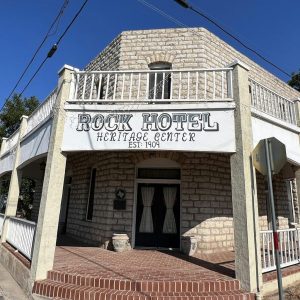
For example, the Rock Hotel and the Z. I. Hale Museum help illustrate the development of transportation, commerce, and community life.
The Historic Rock Hotel
The Rock Hotel was constructed in 1909 to accommodate travelers and railroad workers arriving in Winters.
At the time, the expansion of railway transportation increased demand for lodging and commercial services.
The building’s native-stone architecture reflects construction traditions commonly associated with early twentieth-century Texas.
Furthermore, the hotel became an enduring reminder of the community’s railroad heritage.
In 1982, the Rock Hotel received recognition as a Recorded Texas Historic Landmark.
Today, it remains an important part of the historical identity of Winters.
The Z. I. Hale Museum
The Z. I. Hale Museum preserves objects and historical information related to Winters and the surrounding region.
In particular, its collections explore farming, ranching, education, commerce, and everyday community life.
Additionally, historical photographs and artifacts help visitors understand how residents lived and worked during earlier generations.
As a result, the museum contributes to preserving local heritage and educating future generations.
The Blue Gap Post Office
The Blue Gap Post Office was established in 1878, before Winters developed into an incorporated town.
During that period, post offices provided essential communication services to isolated settlements.
Moreover, they often served as important gathering places for residents.
The preserved log structure offers insight into nineteenth-century settlement and communication in Runnels County.
Community Life, Education, and Traditions
The history of Winters includes more than agriculture, railroads, and historic buildings.
Schools, churches, newspapers, and civic organizations also helped shape the community.
For instance, Charles Tipton Grant organized a brass band in 1901 that became known throughout parts of West Texas.
Similarly, local newspapers played an important role in connecting residents.
The Winters Recorder began publication in 1903 and became the Winters Enterprise in 1905.
Through these publications, residents could learn about local developments, community celebrations, and public affairs.
Furthermore, educational and religious institutions helped establish traditions that continued across generations.
Winters During the Twentieth Century
Throughout the twentieth century, Winters experienced changes in population, business activity, and local industry.
Agriculture continued to influence the economy. However, manufacturing and other commercial activities gradually created additional employment opportunities.
For example, businesses involved in metalworking, equipment manufacturing, and specialized products contributed to economic diversification.
Public services also expanded. A public library was established in 1964 and improved several years later.
By 1980, Winters had reached a population of 3,061 residents.
Nevertheless, the town later experienced demographic and economic changes similar to those affecting other rural Texas communities.
Despite these challenges, Winters continued to preserve its historical identity and community traditions.
Preserving the Heritage of Winters
Historical preservation plays an important role in maintaining the identity of Winters.
Museums, historic buildings, photographs, newspapers, and family records provide valuable connections to earlier generations.
Furthermore, these materials help researchers understand how the community developed over time.
For example, old photographs may reveal changes in local streets, businesses, schools, and public buildings.
In addition, family histories preserve personal experiences that may not appear in official records.
Therefore, protecting historical materials helps ensure that future generations can appreciate the town’s heritage.
Discover the History and Spirit of Winters, Texas
From its pioneer beginnings to railroad expansion and agricultural development, Winters has a history closely connected to the growth of West-Central Texas.
Today, its historic landmarks, museums, and community traditions provide opportunities to explore the lives of earlier residents.
Whether you are researching family history, learning about Runnels County, or planning a visit, Winters offers an engaging glimpse into the past.
In conclusion, the history of Winters, Texas, demonstrates how determination, cooperation, and community traditions helped shape a lasting rural identity.
Explore more about Winters: